Benchmark report

For every $1 your members redeem in rewards, they spend $12

Smiling woman with curly hair holding a credit card while using a laptop

A common hesitation keeps brands from launching loyalty: rewards can feel like margin you give away. The data says otherwise. Points cost you almost nothing to issue, and when a member redeems them, the reward is the smallest line on the order. Across the ethos client base, every $1 redeemed in rewards landed on roughly $12 of spend.

verticals measured
Retail
+ more
measured across

The ethos client base, multiple verticals

What we looked at
We pulled every reward redemption across the ethos client base and matched it to the order it landed on.

A common question before launching loyalty: does rewarding customers actually drive additional revenue, or does it just hand margin back to people who would have bought anyway? We ran the numbers across the whole base. The answer is clear. Rewards drive added revenue, and they do it in every vertical we measured.
How loyalty actually pays
It costs little to give a customer a small reward.

Every loyalty program runs on the same loop, and the only question that matters is whether it pays out. On ethos it does. Points sit as a small liability until a member redeems, and the redemption is exactly what brings the order with it.
Members earn points

Across purchases, referrals, reviews, social, birthdays. Points cost you almost nothing to issue and give customers a reason to keep showing up.

They redeem for a reward

The reward they cash in is small. The average redemption is a low double-digit dollar value, the most efficient sales trigger in your stack.

They place a full-size order

The basket built around that reward dwarfs it. For every $1 redeemed, members spent roughly $12 at checkout.

Key Results
$12 spent for every
$1 redeemed in rewards

The reward a member cashes in is tiny next to the order it lands on. One dollar redeemed, roughly twelve dollars spent at checkout.

$185 incremental spend unlocked

Beyond the reward's face value, the average redemption order carried $185 of additional spend. Every $1 redeemed accompanied about $11 in extra order value.

4 out of 5 redemptions return more than 5x the reward

Nearly four in five redemption orders ran at least 5x the reward value. Over half cleared 10x. This is the norm, not the outlier.
The reward you were afraid to give away is the best return in your marketing stack.

"

The tension
Brands hesitate on loyalty because rewards look like a liability. The math runs the other way. The worry is reasonable on its face. Points pile up as an obligation on the balance sheet, and a reward reads like a discount handed to someone who would have bought anyway. That logic only holds if the reward is the whole transaction. It almost never is. Points are close to free to issue. The reward a member eventually redeems is small. And when they redeem it, the reward sits on a full basket, not a bare-minimum order. The thing brands treat as a cost is actually the most efficient way to bring a customer back to checkout.
Brands hesitate on loyalty because rewards look like a liability. The math runs the other way.

The worry is reasonable on its face. Points pile up as an obligation on the balance sheet, and a reward reads like a discount handed to someone who would have bought anyway. That logic only holds if the reward is the whole transaction. It almost never is. Points are close to free to issue. The reward a member eventually redeems is small. And when they redeem it, the reward sits on a full basket, not a bare-minimum order. The thing brands treat as a cost is actually the most efficient way to bring a customer back to checkout.
To see it, you need three things most analytics never connect:
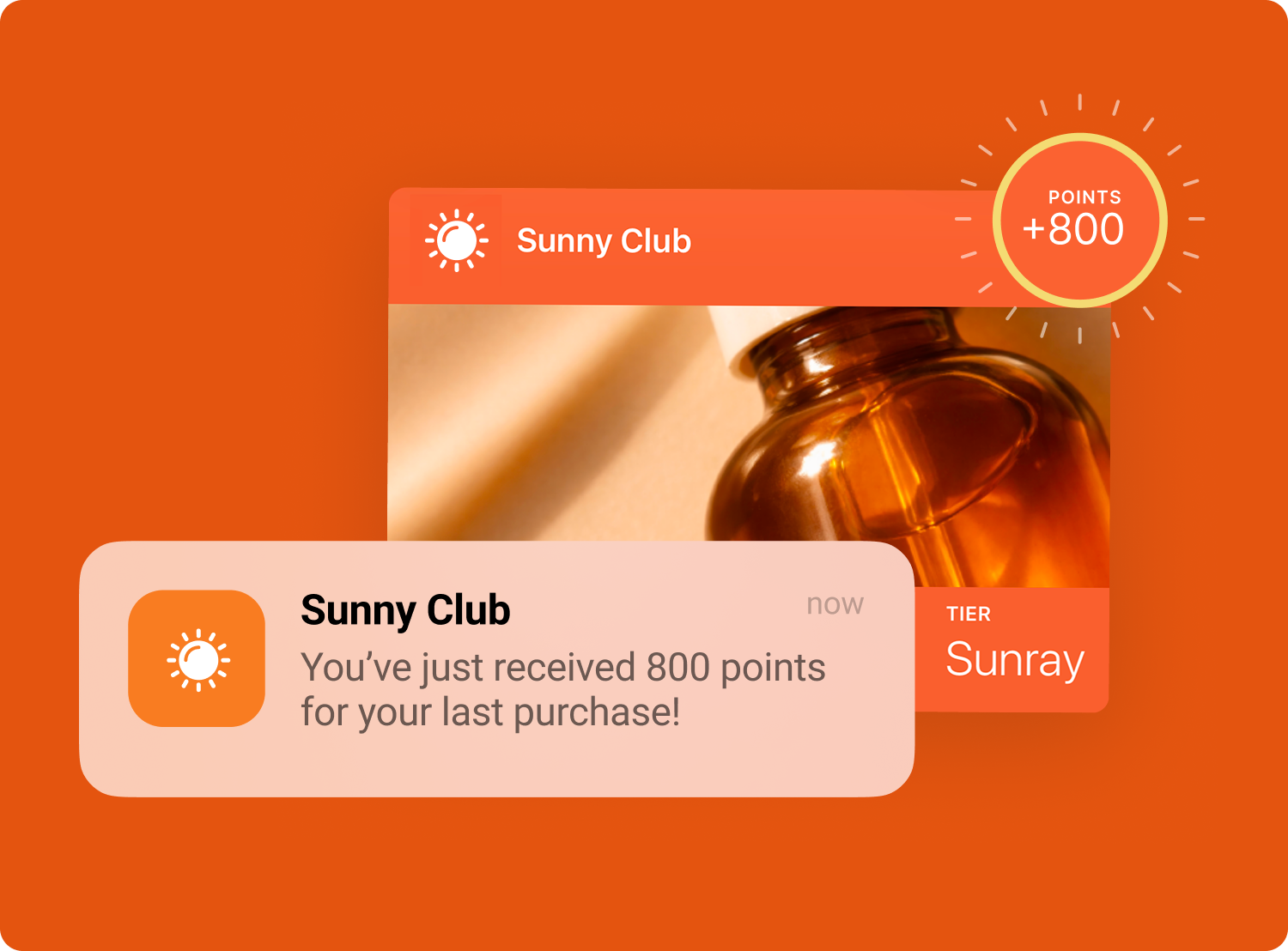
Sunny Club loyalty card with a notification that a member just received 800 points for their last purchase
To see it, you need three things most analytics never connect:
  • Every reward redeemed, tied to the exact order it was applied to
  • The full order value, not just the discounted line
  • Enough range across categories to prove it is a pattern, not a fluke
ethos records all three by default, which is how this analysis exists at all.
The pattern holds everywhere
It is not a category quirk. Every vertical we measured spent multiples of the reward. Whatever you sell, a redeemed reward arrives attached to a far larger order. The multiple shifts by category, but the loop pays out across all of them.
Vertical
avg reward
avg order
spend per $1 reward
Baby & Kids
$10.31
$143.39
$13.90
Fashion & Apparel
$29.08
$369.68
$12.70
Beauty & Personal Care
$10.52
$120.43
$11.40
Baby & kids
Average reward $10.31
Average order $143.39
$13.90 spent per $1 of reward.
Fashion & Apparel
Average reward $29.08
Average order $369.68
$12.70 spent per $1 of reward.
Beauty & Personal Care
Average reward $10.52
Average order $120.43
$11.40 spent per $1 of reward.
What it looks like in practice
These aren't outliers. Small reward, large order. It's a clear pattern.

Real redemptions from the client base, anonymized and rounded. Small reward, large basket. The kind of order a brand would happily pay far more than the reward to bring in.
$54
SPENT PER $1
$10 reward
$540 order
$76
SPENT PER $1
$20 reward
$1,510 order
$70
SPENT PER $1
$20 reward
$1,410 order
$67
SPENT PER $1
$20 reward
$1,330 order
$61
SPENT PER $1
$20 reward
$1,220 order
$56
SPENT PER $1
$20 reward
$1,110 order
$54 spent per $1
$10 reward  |  $540 order
$76 spent per $1
$20 reward  |  $1,510 order
$70 spent per $1
$20 reward  |  $1,410 order
$67 spent per $1
$20 reward  |  $1,330 order
$61 spent per $1
$20 reward  |  $1,220 order
$56 spent per $1
$20 reward  |  $1,110 order
This isn't a handful of big orders
Strip out the headline-grabbers and the pattern still holds.

Share of redemption orders that exceeded the reward value by each multiple. Over half of every redemption ran at least 10x the reward.
2x or more
93.1%
3x or more
88.9%
5x or more
78.7%
10x or more
53.6%
20x or more
23.8%
Why ethos produces this
The return on loyalty is a feature of how ethos is built, not a happy accident.

Members earn across every moment, not just purchases. Points are earned through referrals, reviews, UGC, social, and birthdays. Members keep engaging between orders, so when they are ready to buy, the points are already waiting and the brand is already top of mind. Turns idle months into a standing reason to return.

Rewards redeemed in-store, where the basket grows. The reward is cashed in at checkout, not parked in an email. Once a member is back in the store to spend it, the basket rarely stops at the reward. They add, they upgrade, they round out the order, and a small reward turns into a full one. Returns $12 of spend for every $1 redeemed.

You see exactly what landed in the order. ethos matches each reward to the exact Shopify order it lands on, line items and all. More often than not you will find your larger, higher-margin products sitting in the basket, not the entry-level items you might expect a discount to attract. Held above 11x in every vertical measured.
The Results
Across the ethos client base, loyalty rewards consistently behaved like a revenue engine, not a cost.
$12 of spend for every $1 a member redeemed in rewards
About $11 of that beyond the reward itself, so the program funds its own rewards and then some
78.7% of redemptions ran at least 5x the reward value
53.6% cleared 10x, proving the return is the norm rather than the outlier
Double-digit returns in every vertical measured, from baby to beauty to fashion
about this data
Figures are aggregated and anonymized across active ethos client programs. No client, brand, or order is named. Reward value is the redeemed reward's face value; order value is the gross Shopify order total the reward was applied to. “Spend per $1 reward” measures the full order value that accompanies a redemption; no purchase is guaranteed for any customer, and figures reflect the order a reward was redeemed against rather than a controlled measure of incremental spend. Verticals are inferred from brand profile and are approximate.

Loyalty rewards on ethos don't give margin away. 
They bring a full order back with them.

If you want a program that turns points into revenue across every order, Book a demo with us today.